
Transport Fever 3 is a strong fit for players who enjoy building transport networks, tracing bottlenecks, and repeatedly improving systems that never stay solved for long. Its main attraction is not conventional city building: you shape towns indirectly by moving passengers and cargo, maintaining profitable routes, and adapting as demand grows. The simulation supports more than 275 vehicles, over 35 industries, four climate zones, and more than 125 years of transport development.
Launch reviews report different technical experiences across platforms. A PS5 reviewer reported smooth play, while PC reviewers described everything from stable performance to disruptive freezes and intermittent bugs. Its transport sandbox is the main reason to consider it, while interface friction, uneven instruction, and technical interruptions remain relevant purchase considerations.
What Transport Fever 3 actually asks you to do
Transport Fever 3 puts you in charge of infrastructure rather than zoning an entire city block by block. You connect settlements and industries, assign vehicles, deliver passengers and goods, and balance the income from successful deliveries against construction and operating costs. Towns then develop around the network you create. Every citizen has a home, a job, and destinations, so passenger traffic is tied to a simulated population rather than presented only as an abstract total.
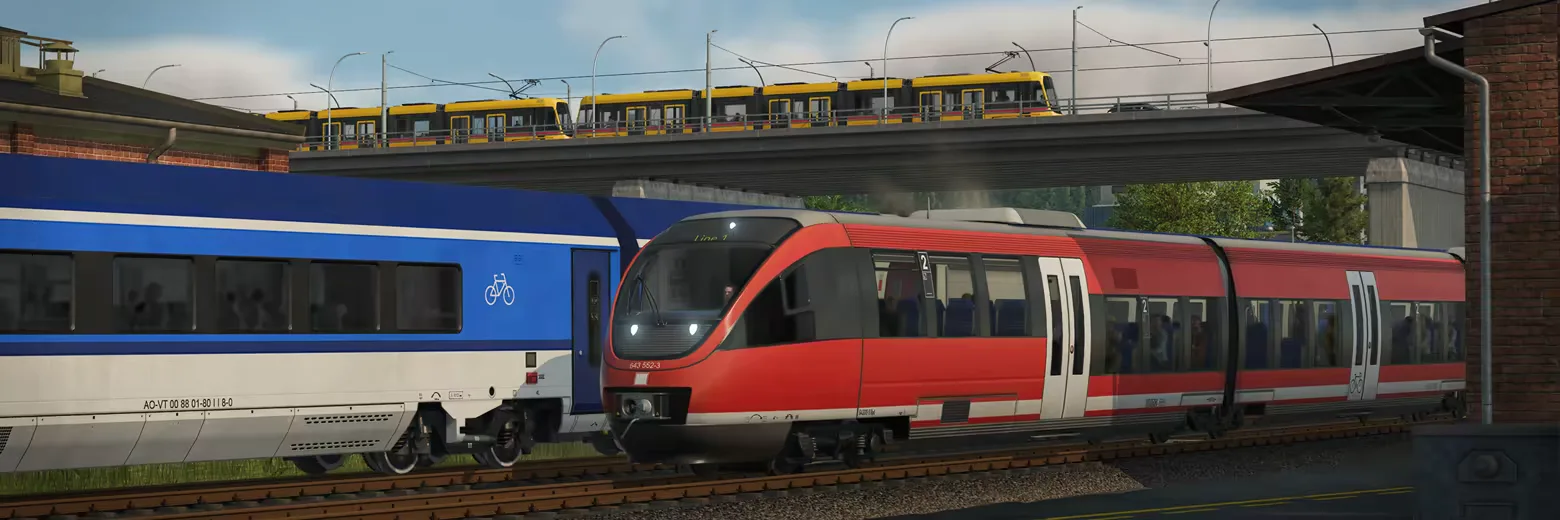
Rail and tram vehicles illustrate the transport-building appeal; this image supplies no performance measurement.
The basic idea is easy to describe, but its consequences compound. A useful early route can eventually need more capacity. New vehicles become available across the historical timeline. Growing towns develop greater needs, while traffic, maintenance, noise, pollution, storage, and perishable cargo create additional constraints. The official feature set also includes advanced lane control, traffic priorities, modular infrastructure, warehouses, offshore industries, a day-night cycle, and dynamic weather.
This is why the game can resemble a city builder at a glance without playing like one. Buildings and districts respond to transport access, but your attention remains on movement: what needs to travel, which mode should carry it, where transfers occur, and whether the entire arrangement still makes financial and operational sense. There is no permanent perfect route. Success creates the demand that forces you to reconsider earlier decisions.
That feedback loop is the heart of the game. A weak connection is not merely inefficient; it can affect waiting passengers, industrial supply, town satisfaction, or the capacity of another line. The appeal comes from recognizing those relationships, making a targeted change, and watching the network settle into a better rhythm.
Where the sandbox earns its time
The strongest case for Transport Fever 3 is the way a network becomes more personal and more complicated over a long save. You can begin with horse-drawn transport and basic local connections, then progress through steam, diesel, electric rail, modern road vehicles, aircraft, helicopters, shipping, and high-speed trains. More than a century of available technology gives expansion a visible sense of history.
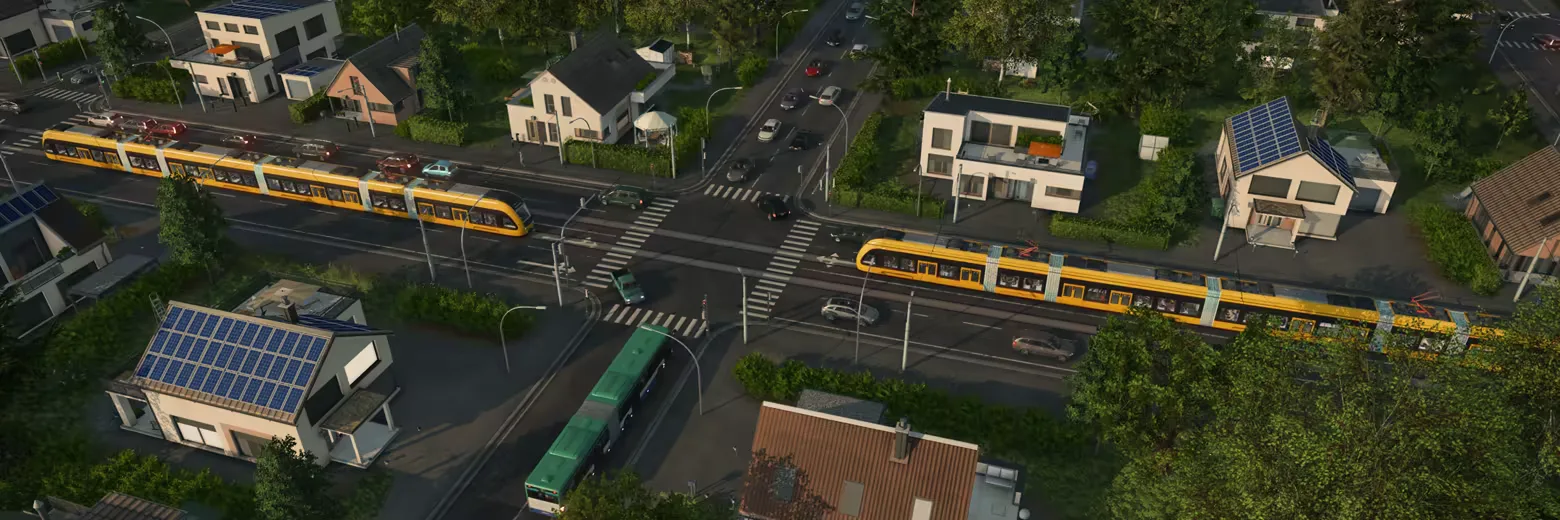
Street-level passenger transport is one part of the network-planning experience.
Tycoon mode supplies structure through financial pressure, population milestones, upgrades, landmarks, and subsidies. Subsidies are limited objectives that can offer rewards while pointing toward a useful expansion. They help reduce the paralysis that can arise when a map presents many plausible projects but no obvious next move. Because accepting an opportunity can also introduce risk, these objectives fit the business simulation rather than feeling like disconnected achievements.
Sandbox mode supports a different mood. Adjustable difficulty can reduce economic pressure, and the economy can be disabled for players who want to focus on construction or create a transport diorama. Randomly generated maps, multiple climates, map editing, and an in-game mod browser broaden the available starting conditions. Those options matter because the underlying activity is repetitive by design: connect, observe, diagnose, expand, and optimize. Variety comes from the shape and constraints of the network rather than from constantly changing the basic objective.
The simulation also rewards close observation. Reviewers describe detailed vehicles, visible interiors, changing weather, cargo movement, and individual citizens who can be followed through a journey. These details do not replace the management layer, but they make the result of that management tangible. Zooming out shows the system; zooming in shows the people and machines moving through it.
The four transport families—road, rail, water, and air—also prevent every problem from having the same answer. Cost, capacity, terrain, distance, traffic, and infrastructure commitments all affect the sensible choice. Rail can become valuable on heavily used corridors but demands substantial construction. Roads offer flexibility while also contributing to congestion, noise, and pollution. Ships and aircraft extend the network across terrain that can make ground construction awkward or expensive. The pleasure lies in fitting these modes together rather than selecting one universal winner.
The management tools are meaningfully better
Transport Fever 3 contains enough moving parts that interface quality can determine whether complexity feels satisfying or exhausting. The game provides data layers and visual displays for identifying traffic hotspots, delivery failures, and excessive noise or pollution. Town overviews expose problems, while notifications can call attention to goods that are not reaching their destination.
The creator of the Pixels and Platforms first-impressions video singled out the combined line and vehicle manager as a major improvement. Vehicles normally exist in the context of a line, so presenting those related decisions together reduces unnecessary navigation. Filters and recognizable cargo icons make it easier to narrow a large fleet, while a table view helps compare vehicle statistics without repeatedly opening individual entries. Automatic line-naming options can also reduce administrative work once a network contains many services.
Construction received smaller but useful refinements. Road and track placement use a click-to-start and click-to-confirm interaction, and separate shortcuts reduce the number of menu tabs needed when switching between infrastructure categories. Station information can expose details such as platform length directly. None of these changes transforms the simulation alone, but together they reduce the repeated friction that becomes noticeable across a long session.
The game also tries to make failure legible. A network with dozens of lines will inevitably develop capacity problems, missed connections, or delivery interruptions. Notifications, town interfaces, filters, and overlays create several ways to locate the affected area. That support is essential because the simulation remains deep even when the menus become clearer. Improved presentation should not be mistaken for a shallow game.
There are limits to that success. TheSixthAxis found scrolling through large lists of lines tedious on PS5 and described fleet upgrades as awkward with a controller. Metro nevertheless considered the streamlined controller interface workable by genre standards. These observations can coexist: the controls may be workable by genre standards while still becoming cumbersome as the network expands. Players buying on console should expect a complex management interface adapted to a controller, not the simplicity of a console-first building game.
The learning curve remains a real drawback
Transport Fever 3 offers a campaign, tutorial material, and contextual guidance, but reviewers disagree sharply about how well they teach the game. TheSixthAxis considered the historical campaign useful preparation before entering the sandbox. The All Aboard… Eventually video review found it excessively padded, arguing that short mechanical lessons were stretched across lengthy scenarios. Metro described the tutorial as broad but prone to assuming knowledge about connections, network menus, and control details.
This disagreement suggests that the problem is not a total absence of instruction. It is the match between the instruction and the player. Someone who enjoys guided historical scenarios may appreciate learning inside the campaign. An experienced series player may find the same structure slow. A complete newcomer can still encounter gaps when the game explains an action without clearly exposing the rule behind it.
The missing sense of safety can intensify that frustration. Metro specifically criticized the absence of undo and redo controls. In a game where construction can be expensive and infrastructure changes may affect several connected systems, a mistaken action can carry more weight than it would in a casual builder. Saving before major reconstruction is sensible, but it is not a substitute for an interface-level correction tool.
The fairest expectation is that Transport Fever 3 helps you operate a large simulation but does not eliminate the need to learn it. Notifications may show that a delivery is failing without making the best solution obvious. Data layers can reveal congestion without designing the replacement junction for you. This is appealing if diagnosis is the game you want to play. It is a drawback if you expect every warning to lead directly to a prescribed fix.
The technical reports are too mixed for a universal promise
Performance is the largest unresolved purchase risk in the reviewed material. TheSixthAxis reported no frame-rate stutters or graphical problems during its PS5 play. A PC reviewer with powerful hardware instead described random freezes, particularly around some data-overlay use, and expressed concern about optimization before reaching a very large late-game network. A different PC-focused reviewer described smooth play at a self-imposed frame-rate limit while also noting that the game demanded substantially more hardware than its predecessor.
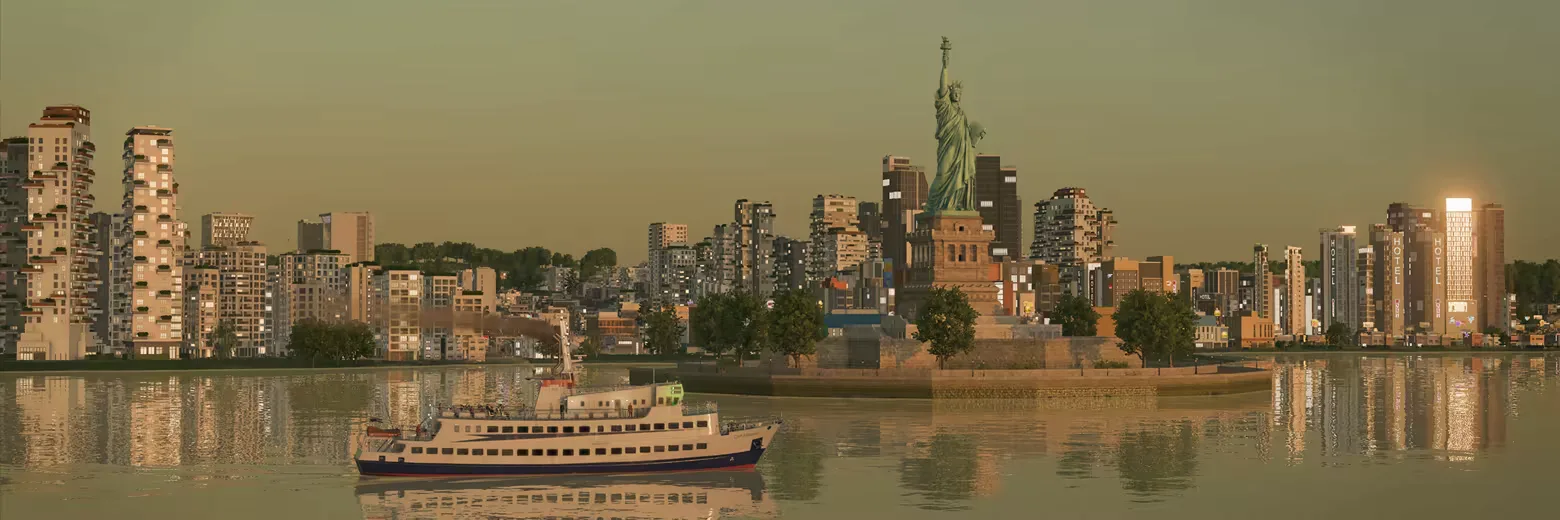
Water transport beside a developed city; this view is not evidence of a measured late-game workload.
Those accounts do not support a single frame-rate claim. They were recorded on different platforms, hardware, settings, saves, and unverified builds. They also do not establish how a fully developed region performs on every supported system. Treat any isolated measurement as one reviewer’s experience, not a benchmark for your computer or console.
Bug reports require the same caution. Individual reviewers encountered problems involving electrified track recognition, cargo transfer behavior, passenger transfers, building rotation, traffic controls, and a tutorial that stopped progressing. Some issues disappeared after rebuilding a line or reloading a save; in other cases, the reviewer could not determine whether the behavior was a bug or a misunderstood rule. These examples establish that reviewers encountered friction, but they do not prove that every save will reproduce it.
These are launch-period observations. Their status in later builds has not been confirmed, so they should not be presented as permanent defects or as fixed issues.
Presentation favors detail over restraint
Transport Fever 3’s visual identity supports the miniature-world fantasy. Vehicles cover multiple eras, infrastructure changes over time, climate zones include temperate, desert, tropical, and subarctic settings, and maps combine dynamic weather with a full day-night cycle. Reviewers noticed detailed tracks, vehicle cabins, cargo, atmospheric effects, and larger infrastructure buildings that feel appropriately substantial.
Not every aesthetic choice will appeal equally. One reviewer disliked the strong color saturation, while others found the world attractive and appreciated the attention to detail. That is a preference issue rather than evidence of a technical defect. The game is designed to remain readable from a management view while still rewarding a close camera, and the result is more stylized than strictly realistic.
The All Aboard… Eventually video review particularly praised the environmental sound. Vehicle sounds, rail noise, level crossings, and directional details help individual parts of the network feel active. The sandbox soundtrack may become repetitive during very long sessions, but a management game expected to run for hours benefits more from informative environmental sound than from constant musical spectacle.
Match the game to your interests
Transport Fever 3 makes its strongest case to transport enthusiasts who enjoy solving a problem and then watching growth create another one. Its road, rail, water, and air networks matter together, while infrastructure spending makes expansion a commitment. The reward is a functioning system that you can inspect at both regional and individual-vehicle scale.
Existing series players should expect refinement rather than a replacement for the familiar formula. The combined management interface, clearer comparison tools, additional logistics, climates, industries, and tycoon structure add substance. If you still enjoy the established loop, that is a useful upgrade. If you have already exhausted that loop, a longer feature list may not change your relationship with it.
For newcomers, the central question is whether diagnosis sounds enjoyable. A notification can identify a failed delivery, but it does not choose the right network change for you. You need patience for observation, experimentation, and some reconstruction. The campaign provides a structured route into the game, although reviewers disagreed about its pacing and explanations.
A technically cautious buyer should check recent evidence for the exact platform and build before committing. The launch reviews establish a strong transport sandbox with uneven technical and instructional experiences; they do not establish that every reported problem persists today or that later updates have resolved it.
If you are comparing editions, check the Deluxe contents. If you have decided to start playing, use the beginner guide to build your first network.