

Transport Fever 3 loans fund the network before it can earn enough money to pay for construction. Open the company finances by selecting your account balance, then use the Loans tab to compare the available cards. Look at the amount borrowed, the term, the interest rate and the displayed annual repayment together. A cheap interest rate is useful, but a repayment schedule that your unfinished network cannot support is still a poor fit.
The practical objective is to borrow enough to open a complete revenue-producing service, keep cash available while it starts operating, and repay debt when the company can afford the outstanding balance. Borrowing itself does not count as transport revenue. A large bank balance immediately after accepting a loan is therefore a construction budget, rather than evidence that the business is profitable.
Find the loan controls before building
Select the cash balance in the lower-left interface to inspect the company finances. The Loans tab contains offers and active borrowing. Read the offer before accepting it, rather than choosing the largest amount simply because it permits more construction. The important comparison is what you can finish with that money and what the resulting service must pay each year.
A new game can begin with an empty account. In that situation, taking a loan is the normal way to start a network. Do the planning first: identify a usable origin and destination, confirm the required transport mode, and check that you can afford facilities and vehicles as well as the connecting infrastructure. A borrowed budget that pays for track but leaves no money for a train has not opened a business.
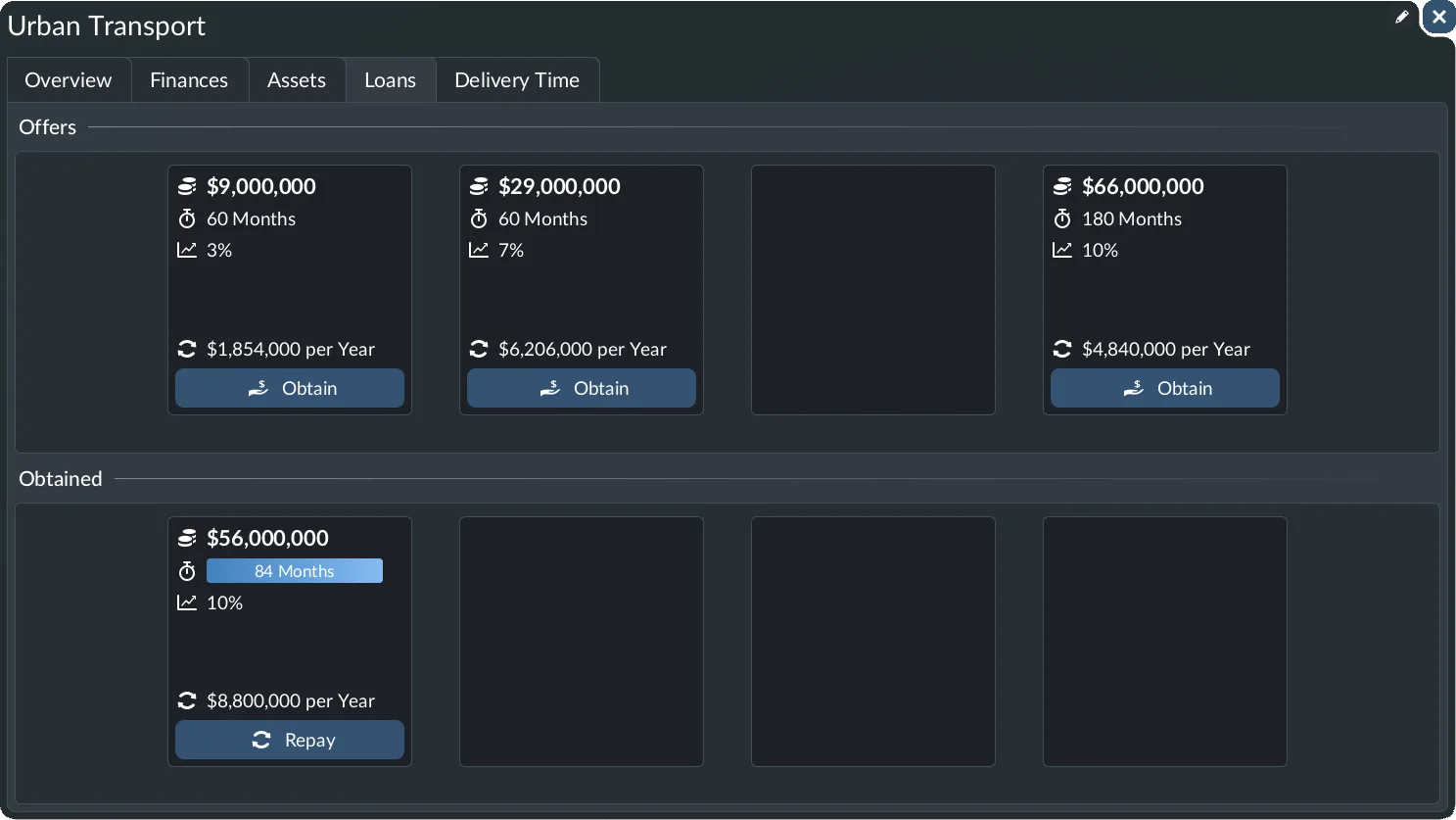
Read the four figures on each offer
The principal is the amount of money the loan supplies. The term describes the time allowed for repayment. The interest rate expresses the borrowing charge, while the annual repayment shows the yearly payment commitment displayed by the game. Compare that final figure with the operating cash your network is likely to generate; it is the immediate affordability check when choosing between offers.
| Field | Question to ask before accepting |
|---|---|
| Principal | Does this cover the complete project and an operating reserve? |
| Term | How long will the company remain committed to this debt? |
| Interest rate | Is there a lower-rate offer that still fits the project? |
| Annual repayment | Can the network support this payment alongside vehicles and upkeep? |
The cheapest-looking percentage does not automatically produce the smallest annual bill. Offers can differ in principal and duration. Likewise, a low annual repayment is not a complete reason to choose an offer if it provides too little money to finish the route. Compare the actual cards in your save. There is no universal borrowing amount that fits every map, difficulty or starting project.
After taking a loan, inspect its active card. The outstanding debt and remaining term are different from the original offer: they describe your current commitment. Use those figures when deciding whether to make an early repayment. Do not plan a repayment around the initial principal if the active card now shows a different outstanding amount.
Budget a complete first service
List the purchases in the order required to produce a delivery. A road service needs suitable pickup and destination facilities, access roads, a reachable depot and compatible vehicles. A railway adds the expense of track, terminals and the required train. A water or air service needs its own appropriate facilities. Borrow for the whole service, rather than treating the line drawn in the manager as the finished investment.
Keep the first project understandable enough to inspect. With one complete route, you can see whether vehicles load, whether they reach the destination and whether revenue appears. Several half-built projects consume the same cash without providing that feedback. They also make it harder to distinguish an operating loss from construction spending when you open the finance table.
Size facilities for the present job. Larger stations and unnecessary additions can increase ongoing upkeep as well as construction cost. A reserve for vehicles and the first operating period is usually more useful than buying empty future capacity at every terminal. Expand after the load or queue demonstrates what is missing, while allowing for construction that is genuinely needed to connect the initial service.
Compare repayment with operating commitments
Annual repayment is one part of the company's recurring obligations. Vehicles have running costs, buildings have upkeep, and road or rail infrastructure can add further upkeep. Open the Finances table to inspect those categories instead of comparing the loan only with gross revenue. A line can collect money while leaving too little for debt payments after its operating costs are considered.
For an illustrative comparison, imagine two displayed offers that both fund your planned route. One has a lower interest rate and an annual repayment your expected operating surplus can support; the other has a higher rate with almost the same annual repayment. The lower-rate offer has a clear advantage on those terms. This is a comparison method, not a claim that those exact offers will appear in your game.
Now change the example: the cheaper-rate card requires much more yearly cash because its principal or term differs. The choice needs a second check. Can you make that payment before new services become reliable? If the answer is uncertain, reduce the construction plan or choose a commitment that fits the cash available. The rate matters, but annual affordability determines whether the debt helps the opening rather than overwhelming it.
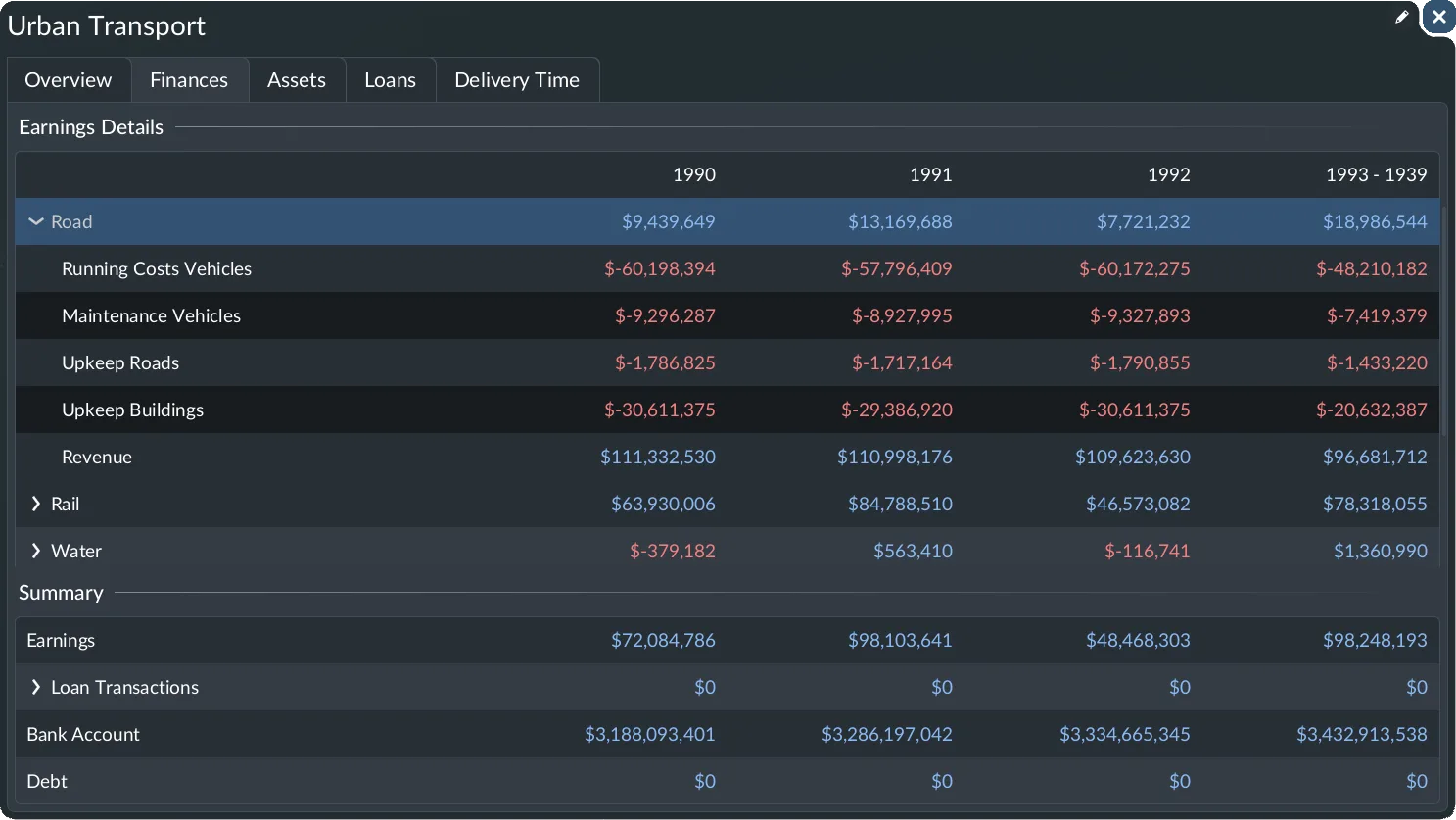
Separate profit, cash and debt
The finance table distinguishes transport revenue, expenditure, investment and loan transactions. Construction and vehicle purchases can reduce cash sharply during an otherwise promising opening. Conversely, a newly accepted loan can raise the bank balance while the transport services are losing money. Inspect the categories before drawing a conclusion from the cash number alone.
Revenue is earned when a cargo item or passenger reaches the destination. If vehicles are still driving to their first pickup or waiting on an incomplete connection, money received from the loan cannot substitute for that delivery. Follow an actual trip. Confirm that loading occurs, unloading occurs and the destination accepts the service before using its expected earnings to justify further borrowing.
Loan principal transactions are also distinct from interest charges. Repaying outstanding debt reduces cash but is not the same as paying for another vehicle or building. When reviewing a sudden drop in the account, identify the transaction that caused it. This distinction prevents you from dismantling a working line just because a planned debt payment made the account smaller.
Use borrowing to finish a route, not hide a fault
When cash is running short, first ask whether another loan would complete a known missing step. A finished station with no vehicle is a specific problem: purchasing a compatible vehicle may finally let the investment work. A constantly empty vehicle on a supposedly completed line is a different problem. Borrowing to purchase more of it will not repair an incorrect pickup, destination or load configuration.
Inspect the first failed trip in order. Check that the origin is accessible, the selected vehicle carries the required load, the assigned line reaches the destination and the stop settings allow unloading. If the service is cargo-based, also inspect whether the complete delivery chain provides a reason for the cargo to move. Fix the missing link before treating cash as the only obstacle.
Once the line operates, watch its results over repeated trips. The first delivery proves that the route works, but it does not establish that the recurring surplus will cover a larger borrowing commitment. Delay an expansion until you can explain the present line's running costs and revenue. This is especially useful when a long route takes time to make its first payment.
Decide when to repay early
The active loan card has a repayment control for settling the outstanding debt when you have enough cash. Before selecting it, compare the amount due with the bank balance and the purchases still required to keep your network operating. Paying back debt reduces borrowing costs, but leaving the company unable to buy a needed vehicle or finish an essential connection can stall the service supporting that repayment.
Use a short checklist: are the current lines operating, are there urgent replacements or unfinished connections, and will cash remain after repayment? If those conditions are satisfied, settling an outstanding loan can remove a recurring obligation. If repayment would empty the account during a construction phase, finish the necessary service first and reconsider once its deliveries are established.
Avoid confusing company assets with available cash. The finance overview includes company value and vehicle assets, but ownership of expensive vehicles does not mean their value is sitting in the bank ready for a loan payment. The repayment decision needs the cash actually available and the outstanding debt shown on the active card.
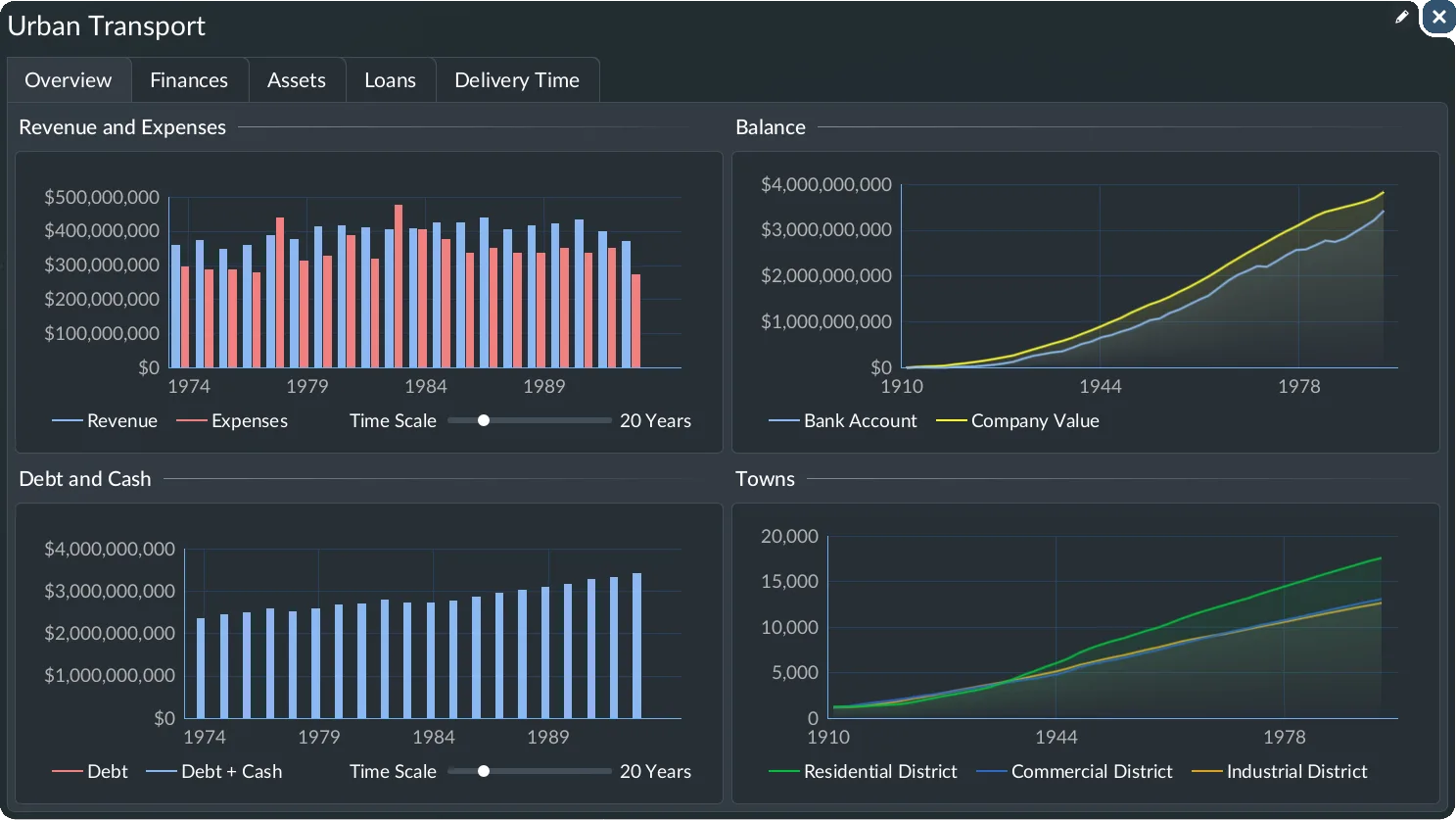
Review debt when expanding the network
An expansion changes both the construction budget and the operating budget. Another train or helicopter is a purchase today and a running cost afterwards. A larger terminal can be a one-time construction expense and an ongoing upkeep commitment. Include both effects before selecting another offer, particularly if the existing debt is already using most of the operating surplus.
Compare a focused upgrade with a completely new route. Adding capacity where vehicles are repeatedly full may be easier to assess because the demand is already visible. A new connection still needs facilities, vehicles, a delivery path and an initial period before revenue arrives. Borrowing can fund either, but the evidence supporting the estimate is different. Write down what the new investment changes rather than assuming every additional vehicle will pay for itself.
Subsidy contracts can also affect income or expenses, and the finance table records their rewards or penalties. Read the actual contract before including a reward in your plan. A useful subsidy is a reason to assess a service, rather than guaranteed money you can spend before satisfying its conditions. Keep the borrowing decision grounded in the routes and commitments you can complete.
Common loan decisions
Should I always choose the lowest rate? Prefer lower interest when the offers meet the same need and the annual repayment is affordable. If principal or term differs, compare the whole card. A low rate does not replace the complete-project and yearly-payment checks.
Why is my account positive while the company is losing money? Borrowing supplies cash without being transport revenue. Inspect revenue and running expenses separately from loan transactions and investment to see what the services themselves earn.
Should I repay everything as soon as cash allows it? Early repayment can reduce the borrowing burden, but inspect essential spending first. Use the outstanding amount on the active card, then make sure enough cash remains to keep the revenue-producing services working.
Will more borrowing fix a failed opening? It helps when money is the final missing resource for a complete, correctly configured route. It does not fix incompatible vehicles, inaccessible stations, empty pickup points or incorrect destination settings. Resolve those faults before committing to another payment schedule.